


Last Man Out - Surviving The Burma Railroad
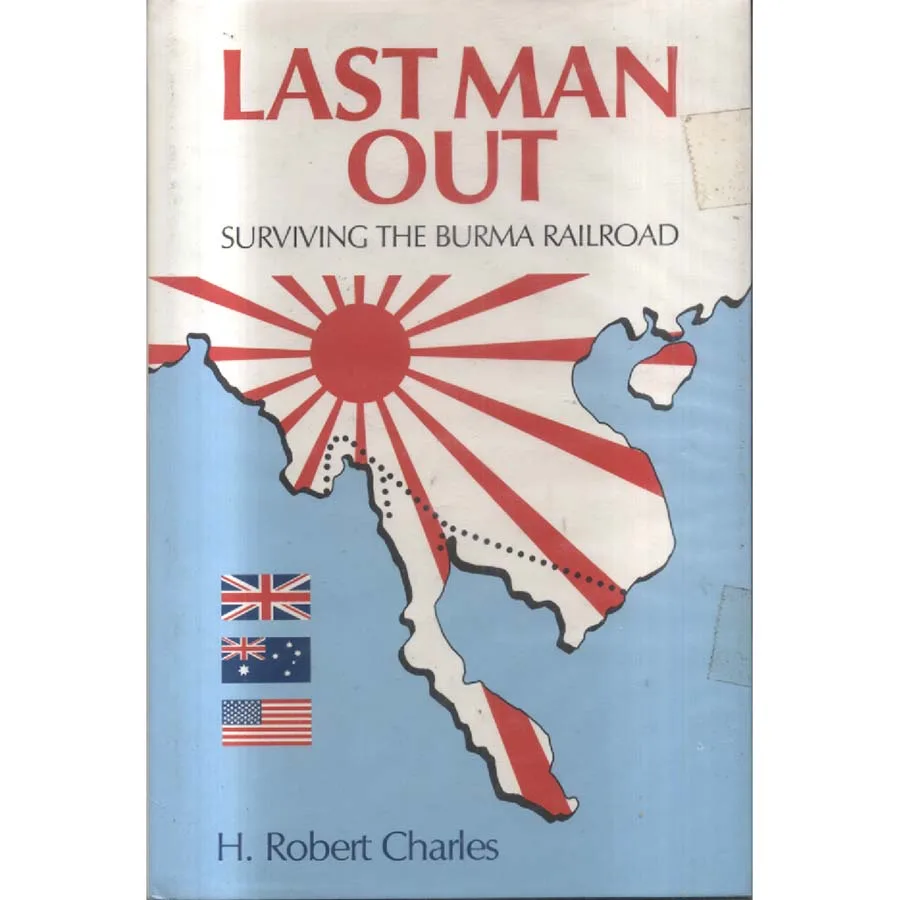
Publisher: Crowood Press
Format: Hardback
ISBN: 9781852232313
H. Robert Charles’s Last Man Out belongs to that grim little section of the war shelf where “survival” is not a slogan but a daily administrative problem. The subtitle says it plainly enough: surviving the Burma Railroad, that vast forced-labour nightmare where Allied prisoners of war and Asian labourers were driven through jungle, sickness, hunger, exhaustion and brutality to build a railway that history has since attempted to make famous, which is not quite the same as making it comprehensible.
This is not the Burma Railway as cinematic shorthand, with a bridge, a whistle and a tidy moral shape. This is the railway as lived from the inside: mud, ulcers, cholera, guards, beatings, impossible work, skeletal rations, tropical disease, and men learning exactly how much of the human body can be bargained away before the soul starts objecting. War, once stripped of maps and speeches, becomes very small: a bowl of rice, a scrap of strength, the next order, the next dawn, the next man who does not get up.
Charles writes from the world where endurance is not heroic in the polished statue sense, but stubborn, filthy, frightened and practical. The body becomes a ledger. Food becomes theology. Time becomes something to be survived in pieces. A day is not a day; it is a distance to be crawled across. The great military phrases, all advance and campaign and theatre, look rather thin beside the reality of prisoners being used as tools by people who had decided mercy was an optional extra.
The title, Last Man Out, has that bleak POW-memoir simplicity: no flourish, no tasteful metaphor, just the hard fact of being one of those who came through when so many did not. It carries the strange irony of the survivor’s account, because to survive such a thing is not to escape it cleanly. The railway remains. The dead remain. The memories remain. Liberation may open the gate, but it does not politely remove the jungle from the mind.
There is anger here, and there should be. There is also witness, which is the important thing. Books like this exist because the world has a disgraceful talent for sanding down atrocity into “hardship” and then placing it safely behind glass. Charles does not offer the decorative version. He gives the reader the uncomfortable one: men worked beyond sense, bodies reduced, decency tested, and the absurd endurance of people who somehow continued when continuing had become an insultingly unreasonable request.
For readers of Far East POW accounts, Burma Railway history, Second World War memoirs, and testimony from the less varnished end of military history, this is a hard but necessary volume. It is not here to improve the mood of the room. It is here to say what happened, which is a much more serious occupation.
Good copy, as sold by Crappy Old Books. A solid survivor of a book about survival, which is almost too neat, but second-hand books do enjoy their small ironies. No medals, no soundtrack, no bridge-building romance; just one man’s account of the railway, the camps, and the business of getting out alive when history had made other plans.
Keep browsing: See more War books Other books by H Robert Charles
